
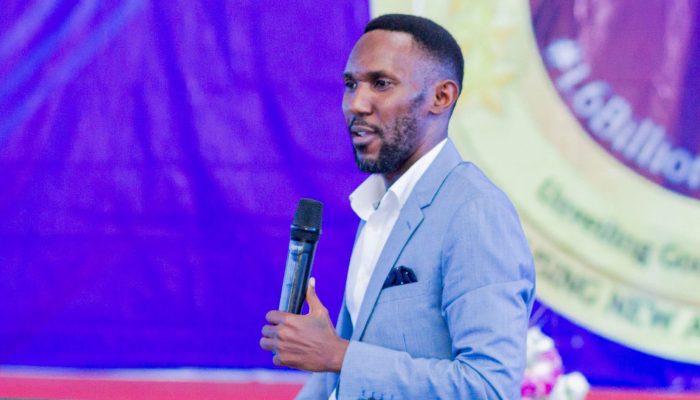
Robert Dennis Kalule: From Street Life to Global Leadership — Building Africa While Connecting the World.
Founder & President, Africa Global Missions (AGM)
Introduction: A Life That Redefines Leadership
In many parts of the world, leadership is often associated with structured progression—education, mentorship, institutional backing, and carefully built careers. Yet, there are rare individuals whose journeys defy this pattern entirely. Their lives do not follow predictable paths; instead, they emerge from disruption, shaped by adversity, and ultimately defined by transformation.
Robert Dennis Kalule is one such leader.
Today, he stands at the intersection of faith, leadership, investment, and global partnerships as the Founder and President of Africa Global Missions (AGM)—a platform committed to mobilizing leaders, institutions, and resources to advance Africa’s long-term transformation. His work spans continents and sectors, engaging governments, churches, investors, universities, and development organizations in a shared mission of building Africa while connecting the world.
However, this global influence did not begin in conference halls or policy forums. It began in a life that was, by every external measure, spiraling out of control.
Understanding Robert Dennis Kalule’s leadership today requires first understanding the depth of the transformation that shaped it.
Early Life in Uganda: Influence Without Direction
Robert’s early years in Uganda were marked not by stability, but by resistance. As a teenager, he developed a reputation that made him widely known within his circles—not for academic excellence or discipline, but for rebellion, influence, and unpredictability.
He was not passive in his behavior. On the contrary, he was highly influential among his peers, often shaping the attitudes and actions of those around him. Unfortunately, this influence manifested in destructive ways. He became associated with indiscipline, drug culture, and a pattern of behavior that placed him at odds with authority figures across multiple institutions.
His academic journey reflected this instability. Moving from one school to another in Uganda, including St. Balikudembe, St. Lawrence Citizens High School in Kampala Uganda, Royal College in Bunga Gaba Uganda, Kakungulu Memorial High School in Bombo, Musinga high school Ntugamao Uganda and finally Mengo senior school kampala Uganda, he was repeatedly expelled. In one instance, his time at Kakungulu lasted only two weeks.
These repeated disruptions were not isolated incidents; they were indicators of a deeper trajectory. At the time, few could have envisioned that this same individual would later become a global voice on leadership and transformation. Yet, embedded within this turbulent phase was a critical element that would later define his leadership—his capacity to influence.
Life on the Streets of Kampala: Power, Independence, and Illusion
After completing his O-Level studies in 2001, Robert made a decisive break from formal education. What followed was not a temporary deviation, but a full immersion into street life in Kampala.
During this period, he lived independently, navigating a world that demanded resilience, adaptability, and survival instincts. He engaged in various forms of business—some legitimate, others shaped by the realities of street economics. In an unexpected turn, he began earning approximately UGX 200,000 per day, equivalent to around $60 USD at the time. For a teenager in early 2000s Uganda, this level of income was not only unusual—it was empowering.
Financial independence brought with it a sense of control. It created the impression that he had discovered a viable path outside traditional structures. Yet beneath this apparent success lay a fragile foundation. Street life, while offering short-term rewards, is inherently unstable. It operates within an ecosystem of risk, unpredictability, and exposure to violence.
This phase of Robert’s life illustrates a critical tension that many young people experience—the difference between perceived success and sustainable purpose. While he had access to money and influence, there was no long-term structure to support growth, stability, or direction.
Meanwhile, his family was in distress. Efforts to locate him included involvement of law enforcement, yet these attempts proved unsuccessful. Eventually, they turned to prayer, entrusting his life to a process they could no longer control.
At the time, this may have seemed like a final attempt. In reality, it marked the beginning of a turning point that would redefine everything.
The Turning Point: Confronting Mortality and Meaning
Transformation often begins with confrontation—moments that force individuals to reassess their direction in ways that cannot be ignored. For Robert, this moment came through tragedy.
His closest friend, Paul, who had shared in the realities of street life, was shot dead by police in Kampala Uganda. The event was not distant or abstract. Robert was directly involved in retrieving his friend’s body from the morgue and organizing his burial. This placed him face-to-face with the consequences of a life that, until then, had seemed manageable.
Standing before the body of his friend, marked by violence and finality, created a moment of undeniable clarity. It was no longer possible to ignore the trajectory he was on. The illusion of control dissolved, replaced by a deeper awareness of vulnerability and mortality.
Moments like these are often described as turning points, but they are more than that. They are moments of decision—where an individual must either continue along a familiar path or step into the unknown.
Robert chose the latter.
He made a deliberate decision to walk away from everything that had defined his life up to that point—the money, the lifestyle, the independence, and the identity he had constructed. He returned home to Nansana Uganda and, in doing so, re-entered a space of accountability, structure, and rebuilding.
This decision marked the beginning of transformation, not as an abstract concept, but as a lived reality.
Rethinking Wealth: From Control to Stewardship
In Robert’s framework, the value of money is measured not only by what it generates, but by what it builds.

One of the most enduring outcomes of Robert’s early experiences is his perspective on wealth. Having experienced financial independence without purpose, he developed a conviction that challenges conventional views of success.
He often articulates this through a simple but profound statement: money is not meant to control people’s lives; it is meant to serve them.
This philosophy reflects a shift from accumulation to stewardship. It redefines wealth not as an end in itself, but as a tool that must be directed toward meaningful outcomes. In Robert’s framework, the value of money is measured not only by what it generates, but by what it builds.
This perspective now underpins his work in transformative investments. Rather than focusing solely on financial returns, he emphasizes models that create long-term value for communities. These include initiatives in agriculture, housing, education, and community development—areas that have the capacity to generate both economic and social impact.
In this sense, his approach aligns with a broader rethinking of development, particularly within the African context. It moves beyond dependency-driven models toward systems that are sustainable, locally anchored, and globally connected.
The Struggle Before Stability: Transformation as a Process
Returning home did not immediately resolve the challenges Robert faced. Transformation, as his story illustrates, is rarely instantaneous. It unfolds over time, often requiring repeated attempts, setbacks, and recalibration.
His return to formal education was marked by continued instability. At Kakungulu Memorial High School, he was expelled again within a matter of weeks. This indicated that while the decision to change had been made, the process of change was still underway.
Eventually, after Musinga high school in Ntungamo Uganda, a school that detached him from his previous kampala connections, he enrolled at Mengo Senior School in Kampala. It was here that a subtle but significant shift began to take place. Through participation in a school drama production, he played the role of a reverend—a role that, at the time, may have seemed purely performative.
Yet, his performance earned him the Best Actor award, signaling not only talent, but an emerging capacity to communicate, influence, and engage audiences in a constructive way. In hindsight, this moment can be seen as an early indication of the leadership and communication abilities that would later define his work.
The Encounter That Changed Direction
A defining moment in Robert’s journey came through an unexpected encounter with faith.
One Sunday morning, he made the decision to attend All Saints Church Nansana Buddo Uganda. His presence alone was enough to draw attention, given his background and reputation to those who knew him. However, what followed was even more unexpected.
After the service, a church elder approached him with a request—to preach the following Sunday. Despite having no formal theological training or church experience, Robert accepted the invitation.
The following week, he stood on the pulpit and spoke for nearly an hour. The response was immediate and impactful, not only for the congregation, but for him personally. It marked a moment of alignment between his natural ability to influence and a new sense of purpose.
Soon after, he made a formal commitment to his faith. This decision did not erase his past, but it provided a new framework through which to interpret it. What had once been a source of instability began to take on new meaning as part of a larger journey toward transformation.
A Mission Rooted in Experience: Investing in Young People
Robert’s early life experiences did not fade into the background; they became the foundation of his mission. Having lived through the realities of school dropout, street life, and identity crisis, he developed a deep and sustained commitment to young people.
This commitment is not theoretical. It is grounded in lived experience, which gives it both credibility and urgency. He understands not only the challenges young people face, but also the systemic factors that shape their decisions and opportunities.
Through initiatives such as the Changing Your Globe Schools Program, the G-Changers Youth Movement, and the Africa Global Young Leaders Programme, he has worked to create pathways for young people to move from potential to purpose.
At the core of these initiatives is a vision to raise what he describes as Africa Global Transformers—leaders who are not only equipped with skills and knowledge, but also grounded in values, responsibility, and a global perspective.
Education, Leadership, and the Future of Africa
Despite his own disrupted educational journey, Robert has become a strong advocate for education as a strategic driver of transformation. His commitment to education is both personal and structural.
On a personal level, he has invested in supporting students, even during periods when his own resources were limited. On a broader level, he views education as a foundational element of national development.
In his framework, education extends beyond academic achievement. It encompasses character formation, leadership development, and the cultivation of vision. It is about preparing individuals not only to participate in existing systems, but to build new ones.
This perspective aligns with a growing recognition that Africa’s future will be shaped not only by resources, but by the quality of leadership that manages those resources.
Leadership Through Challenge: Lessons in Trust and Collaboration
Robert’s journey into leadership has not been without its challenges. Like many leaders working across diverse contexts, he has encountered moments of disappointment, including broken partnerships and unmet expectations.
These experiences, while difficult, have played a formative role in shaping his understanding of leadership. Rather than leading to withdrawal, they have reinforced the importance of trust, accountability, and alignment in collaborative work.
They have also strengthened his conviction that Africa’s transformation cannot be achieved through isolated efforts. It requires systems of collaboration that are both intentional and resilient.
Africa Global Missions: A Platform for Integrated Transformation
At the center of Robert’s work is Africa Global Missions (AGM), a platform designed to bring together diverse stakeholders around a shared vision of transformation.
AGM operates as more than an organization; it is a framework for alignment. It connects churches, governments, investors, universities, and development organizations in a coordinated effort to address complex challenges.
Its mission—building Africa while connecting the world—reflects a dual focus on local transformation and global integration. It recognizes that Africa’s future is not isolated from global systems, but deeply interconnected with them.
Conclusion: From Personal Transformation to Global Impact
The story of Robert Dennis Kalule is not simply a narrative of personal change. It is a reflection of what is possible when transformation is pursued intentionally and sustained over time.
It demonstrates that leadership is not defined by where one begins, but by the decisions made along the way. It also highlights the importance of frameworks—systems of thought and action that can be applied beyond individual experience.
From the streets of Kampala Uganda to global platforms, his journey embodies a broader message for Africa and the world: transformation is not only possible, it is scalable.
And perhaps most importantly, it is necessary.
Founder and President at Africa Global MIssions | globalmandate@africaglobalmissions.org.uk | Website | + postsBio ⮌
Robert Dennis Kalule is an African leader and global speaker, and the founder of Africa Global Missions and Global Changers Group. His work focuses on leadership development, transformative missions, and global partnerships driving Africa’s long-term transformation. He also leads The Global Mandate, mobilizing leaders worldwide for global cooperation and impact. Robert is committed to raising a new generation of ethical, innovative, and globally responsible African leaders.
- Robert Dennis Kalule
- Robert Dennis Kalule